05 November 2025
Meeting of the Foreign Side of the FIC Energy Working Group with Members of the Mazhilis of the Parliament of the Republic of Kazakhstan
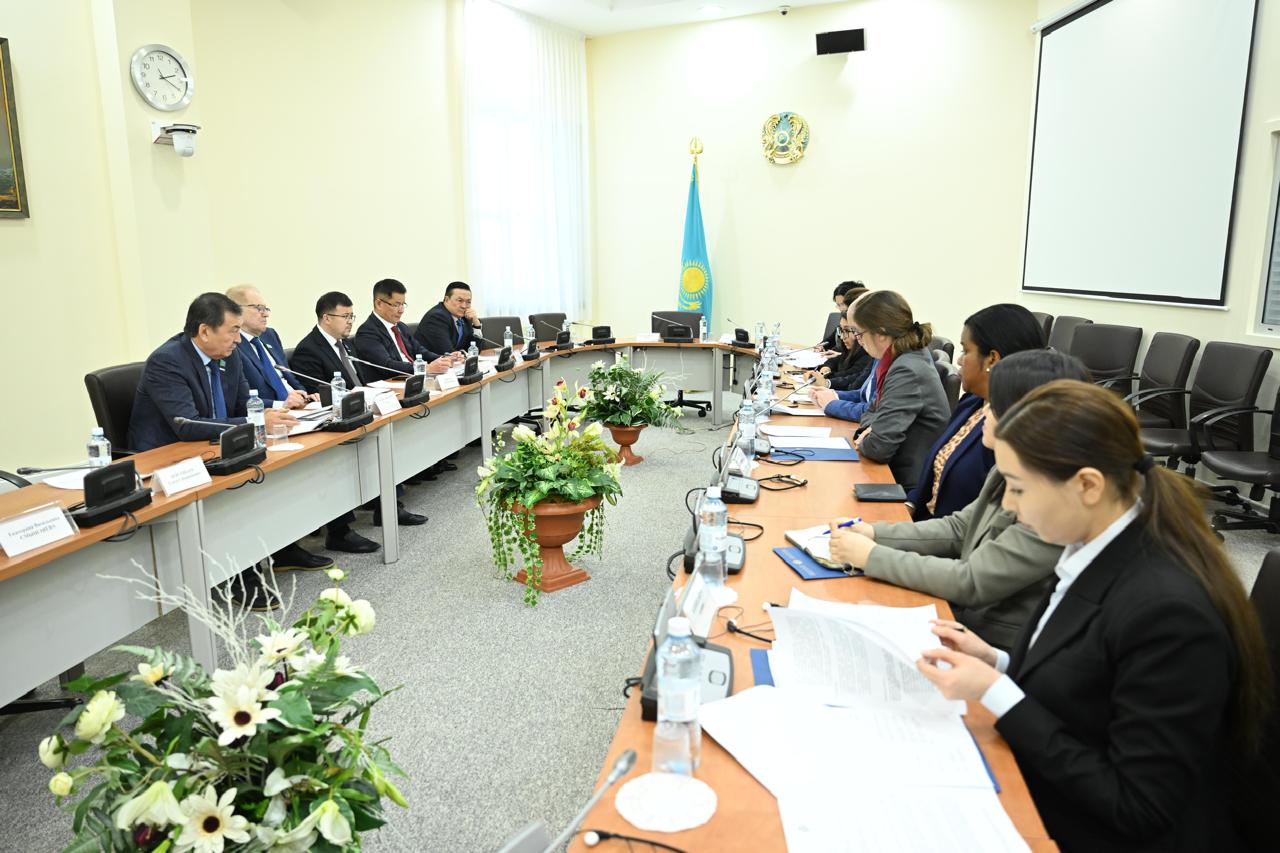
Topic: Limiting the Duration of Rotational Shifts to No More Than 15 Days
On 5 November, the Co-Chair of the Foreign
Investors’ Council Energy Working Group from the foreign side, Ms. Cécile
Rauline, together with members of the Working Group, held a meeting with
Members of the Mazhilis of the Parliament of the Republic of Kazakhstan. The
discussion focused on the Draft Law of the Republic of Kazakhstan introducing
amendments to Article 135-4 of the Labour Code, aimed at limiting the duration
of rotational shifts to no more than 15 calendar days.
Participants from the Mazhilis of the Parliament
of the Republic of Kazakhstan:
Albert Rau – Deputy Chairman of the Mazhilis of the Parliament of the Republic
of Kazakhstan, Dyusenbay Turganov – Member of the Committee on Ecology and
Nature Management, Erbolat Satybaldy – Member of the Committee on Ecology and
Nature Management, Zharkynbek Amantay – Member of the Committee on Legislation
and Judicial and Legal Reform, Elnur Beisenbayev – Member of the Committee on
Socio-Cultural Development, Adil Zhubanov – Member of the Committee on Finance
and Budget, Zhulduz Abulgazina – Director of the Labour and Social Partnership
Department of the Ministry of Labour and Social Protection of the Population of
the Republic of Kazakhstan, Venera Murzalina – Head of the Division of the
Labour and Social Partnership Department of the Ministry of Labour and Social
Protection of the Population of the Republic of Kazakhstan.
Key Takeaways:
- Objective of the initiative: protecting employees’ rights and health, strengthening corporate social responsibility, and ensuring safe working conditions.
- Social impact: extended rotational periods cause stress, emotional and physical fatigue, and have a negative effect on family relations and social well-being in the regions.
- International practice: the 14/14 roster adopted in Norway, Canada, Australia, and the United Kingdom is considered an optimal balance between safety and productivity.
- Safety: the highest number of workplace injuries and errors occur in the final days of a rotational shift.
- Economic aspect: potential increases in logistical costs may be offset by reduced staff turnover, fewer incidents, and improved productivity.
- Engagement with business: the Mazhilis requested additional analytical data on the impact of various rotational regimes; flexible solutions are being considered for foreign specialists and critical operational roles.
Both sides agreed to continue constructive
dialogue. The FIC Energy Working Group will prepare a consolidated position and
provide additional calculations as requested by the Mazhilis.